Line and Shape
One of the most common uses of line is to define shape. We can draw circles, squares, triangles, etc. it gets really interesting when we begin drawing contour lines.
I have always thought of contour lines as the outline of something. Out of curiosity I looked up the definition and found it interesting. One definition said, "a line connecting points of equal elevation." This is of course referring to contour lines on a map, but if we take the idea and apply it to drawing it makes one think. Contour lines when grouped together are meant to show elevation changes or depth, but a single contour line is actually flat. When we look at contour line in drawing as the outline of something, it is flat. It's a silhouette. There is no space, no depth. Despite this lack of depth, a well drawn contour line will still define the shape and communicate ideas, and even emotion. And of course you play with perception in fun ways.
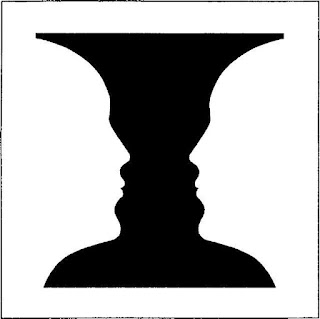
This optical illusion is a classic for teaching perspective shifting and a good example of contour lines defining shape. Is it a vase or faces?
I also really love the classic Dr Seuss book the Shape of Me and Other Stuff. The whole book is silhouettes. I particularly like the way he depicts the many shapes of chewing gum.

Try drawing the outline of something. Not as you think it is in your mind, but really look at the outline and draw it as you see it. Pick some unusual shapes a chair, maybe a cup, or if you are really daring a purse or bag.
I have always thought of contour lines as the outline of something. Out of curiosity I looked up the definition and found it interesting. One definition said, "a line connecting points of equal elevation." This is of course referring to contour lines on a map, but if we take the idea and apply it to drawing it makes one think. Contour lines when grouped together are meant to show elevation changes or depth, but a single contour line is actually flat. When we look at contour line in drawing as the outline of something, it is flat. It's a silhouette. There is no space, no depth. Despite this lack of depth, a well drawn contour line will still define the shape and communicate ideas, and even emotion. And of course you play with perception in fun ways.
This optical illusion is a classic for teaching perspective shifting and a good example of contour lines defining shape. Is it a vase or faces?

I also really love the classic Dr Seuss book the Shape of Me and Other Stuff. The whole book is silhouettes. I particularly like the way he depicts the many shapes of chewing gum.

Try drawing the outline of something. Not as you think it is in your mind, but really look at the outline and draw it as you see it. Pick some unusual shapes a chair, maybe a cup, or if you are really daring a purse or bag.
Comments